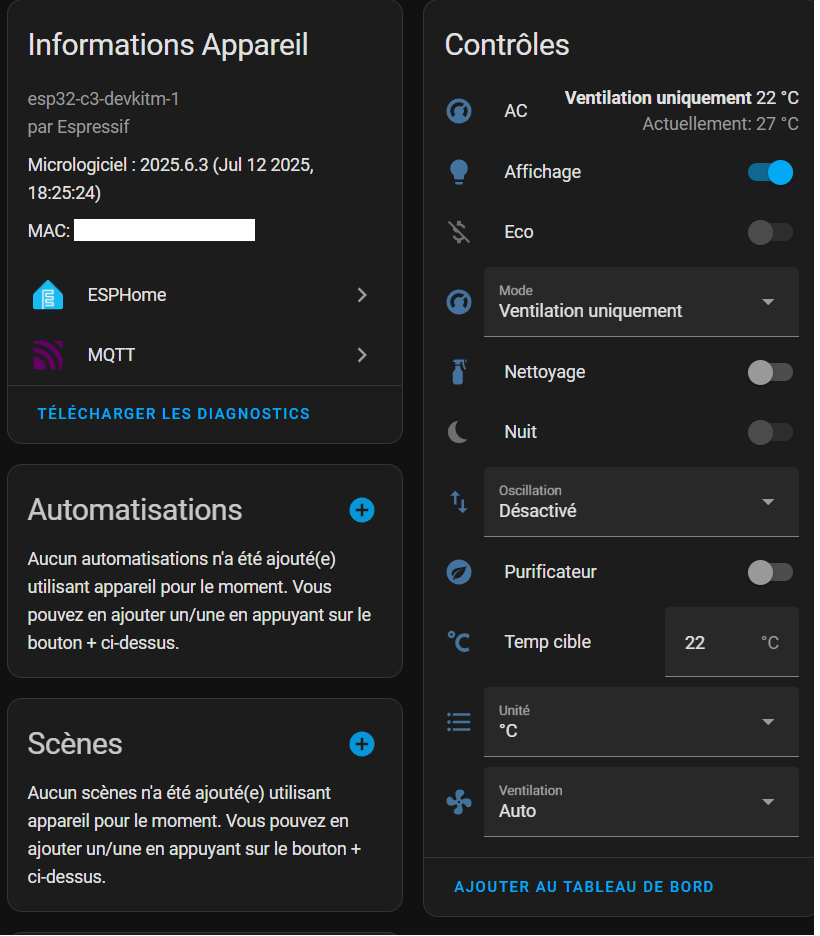
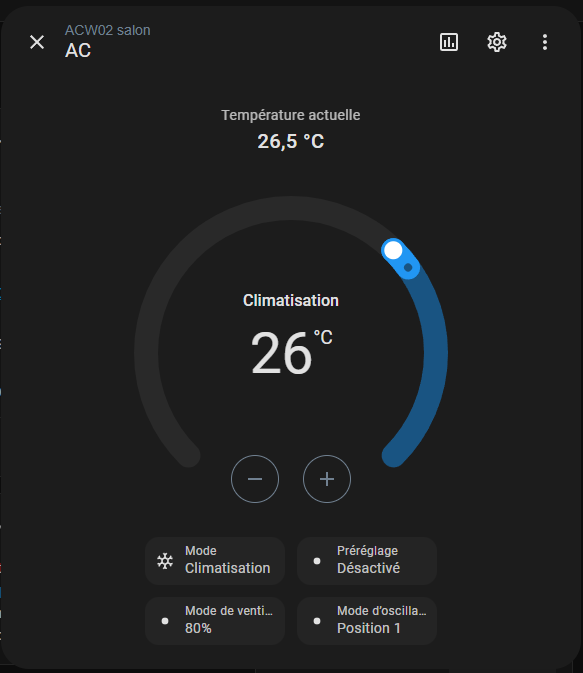
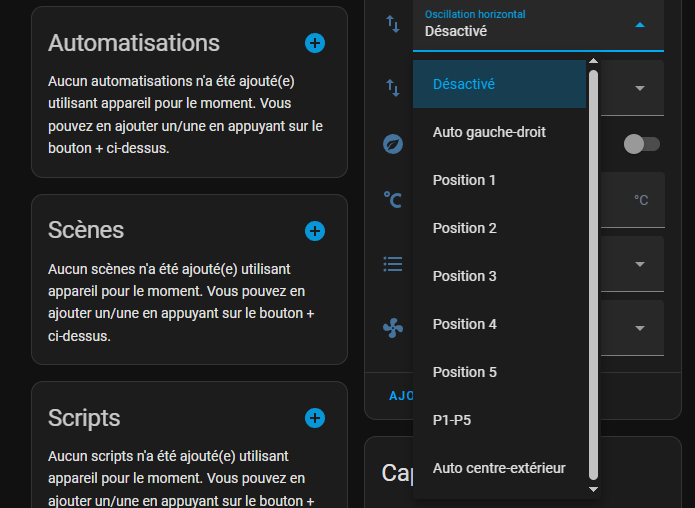
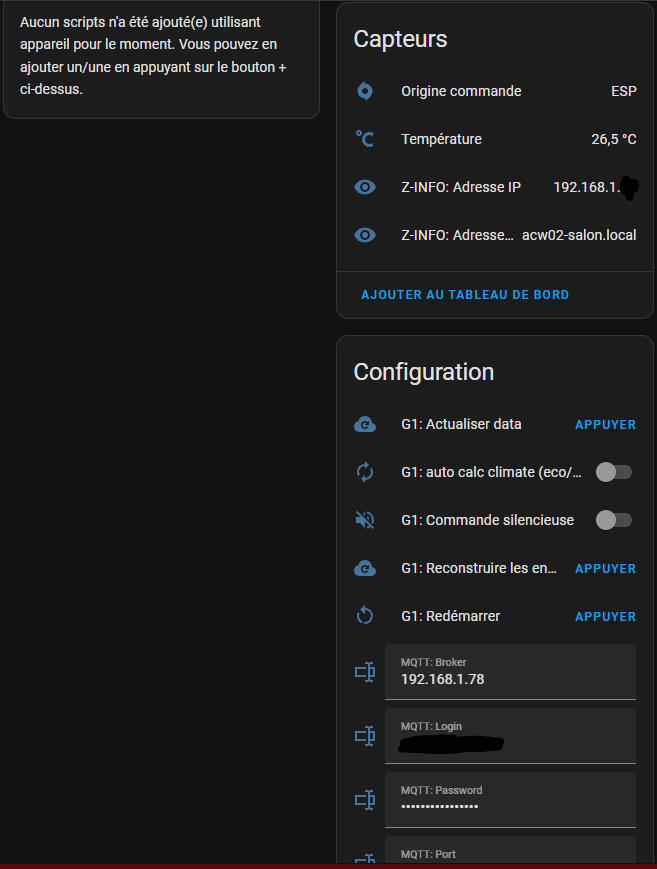
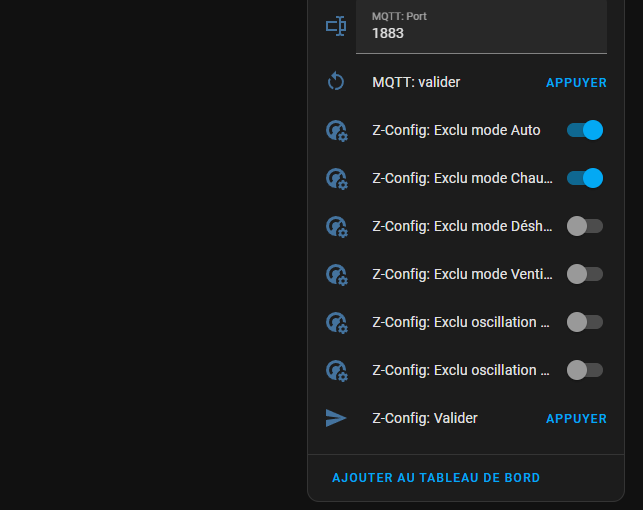
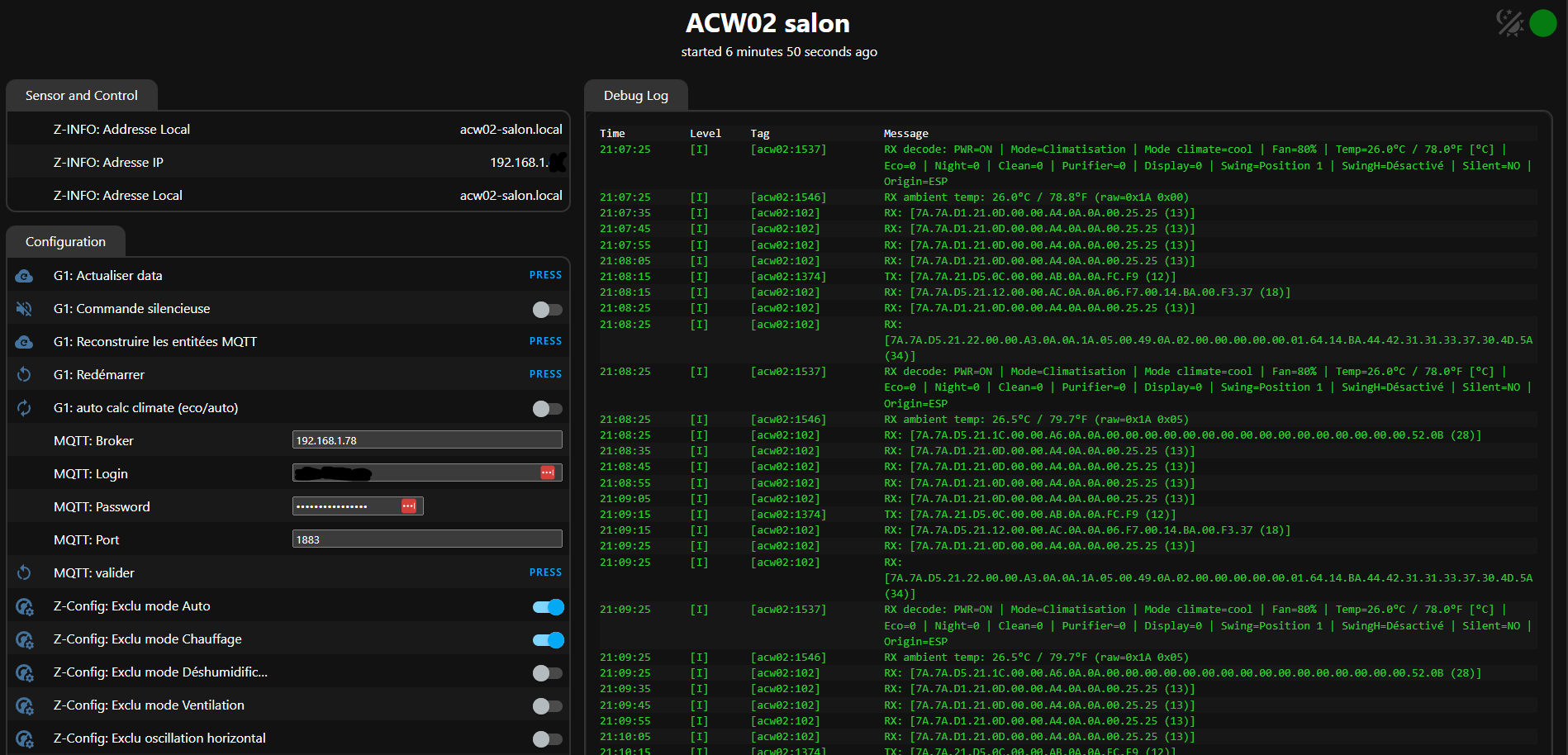
Yes ^^, les seuls changements que j’ai faits c’est
` // globals Statics base trame (keep alive?)
static const std::vector<uint8_t> keepalive_frame_ = {
0x7A, 0x7A, 0x21, 0xD5, 0x18, 0x00, 0x00, 0xA1,
0x00, 0x00, 0x00, 0x00
};
// globals Statics base trame (keep alive?)
// static const std::vector<uint8_t> keepalive_frame_ = {
// 0x7A, 0x7A, 0x21, 0xD5, 0x0C, 0x00, 0x00, 0xAB,
// 0x0A, 0x0A, 0xFC, 0xF9
// };
// globals Statics base trame (ask status AC)
static const std::vector<uint8_t> get_status_frame_ = {
0x7A, 0x7A, 0x21, 0xD5, 0x18, 0x00, 0x00, 0xA1,
0x00, 0x00, 0x00, 0x00
};
// globals Statics base trame (ask status AC)
// static const std::vector<uint8_t> get_status_frame_ = {
// 0x7A, 0x7A, 0x21, 0xD5, 0x0C, 0x00, 0x00, 0xA2,
// 0x0A, 0x0A, 0xFE, 0x29
// };
`
Sur la airton je ne suis pas sûr qu’il y ait besoin d’une trame keep alive car elle envoie par elle-même toutes les 10 sec ses infos
et dans le yaml
`
substitutions:
dev_name: « airton-chambre »
dev_friendly: airtonchambre
lang: « fr »
api_encrypted_key: « »
ota_password: « »
ap_password: « »
board: esp32-c3-devkitm-1
uart:
id: uart_acw02
tx_pin: GPIO2
rx_pin: GPIO3
baud_rate: 9600
stop_bits: 1`
J’ai fait rapidement pour essayer, si tu veux affiner